

I can definitely relate to that.Your wiring pleases my somewhat compulsive desire for things to line up neatly.

Steel Soldiers now has a few new forums, read more about it at: New Munitions Forums!
I can definitely relate to that.Your wiring pleases my somewhat compulsive desire for things to line up neatly.
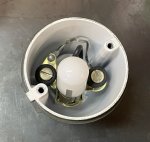
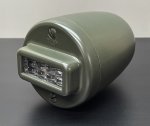

Glad I could give you an idea or two.Now I know what I am going to put on the empty bracket for the blackout light on the M715 I'm rebuilding. “Imitation is the sincerest form of flattery”.
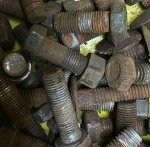
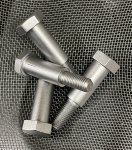
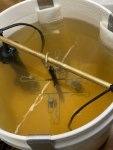
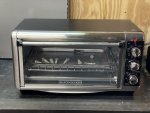
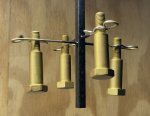
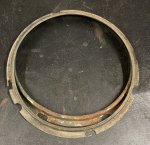
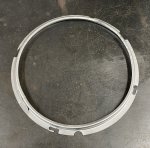
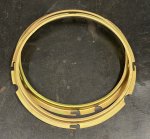
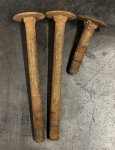
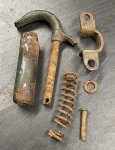
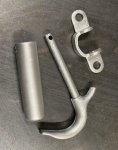
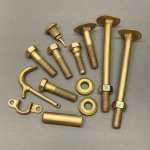

I found a book on electroplating that said high-carbon or high-tensile fasteners should be baked at 200C -220C (428F) for four hours following the plating step. Another source recommended baking for at least four hours at between 375F and 450F.What temperature are you baking at to reduce hydrogen embrittlement? My experience is limited: several decades in the steel spring wire manufacturing business. We did a lot of heat treament (quench and temper to increase hardness/tensile strength), but we did no plating. Many of our spring-maker customers plated, so I picked up a little bit over the years. Hydrogen embrittlement is a major concern for plated springs, since it can greatly reduce cycle life. My impression was that the the baking they did to reduce hyrdogen embrittlement was at around +/-400˚F. However, I know they were also concerned about altering the properties of the zinc coating: the baking temperature is well below the melting point, but exposing zinc plating to elevated temperatures even below the melting point can reduce it's corrosion resistance. (I can't recall the temperature where that became a concern. Also can't remember if that concern about reduction of corrosion resistant was also time-related or not: was it ANY exposure over some certain temperature, or just prolonged exposure.) Those spring makers would stress relieve some spring designs after forming. This was at a significantly higher temperature, but they only did this on unplated springs.
It's hard to tell from the picture of your oven, since the picture of the temperature knob is not all that clear. I can't tell if there is an indicator pointing to 300˚, or a small notch pointing to 400˚.


The bulbs I took out were just small 1156-base 24V filament bulbs, #190877.I'm interested in what lights you have now for instrument lighting, and what you end up using. Mine are too dim to read the instruments at night.
I have the type of instrument panel that requires bulb replacement from the back. All of the gauges and hardware will be thoroughly cleaned before reassembly. I might replace some or all of the gauges, as it appears that at least a couple of them are not working.If you have the later dash light assemblies (those that screw in from the front) change out the original 313 lamps with 356's. This will put the filament in line with the opening in the gages, thereby letting in lots more light. Don't forget to glean up those openings, the plastic insert will get really dirty and block the light.

