Because of you, I will look at my 24v options. Would 48v have any advantages on efficiency and making 30Kwh last longer?
One I can think of is the new large 48v, 16Kwh batteries are just a sweet deal. Add in a 24v to 48v Converter between the vehicle and the DC --> DC charger.
Same Kwh target here...shooting for 2 x 16Kwh batteries in parallel. And same water capacity target at 100 Gallons. Would you run a water pump off the 30Kwh to pull in water from lake/stream?
48V comes in handy with large loads - higher voltage = lower amperage. Watts are watts. 48V @ 100A is the same as 12V @ 400A. The batteries remain the same, they're just in a different configuration. Pricing should be roughly the same.
The thing is, when it comes to mobile, there aren't really the needs for high current devices like dryers, or ovens. Most mini splits you find will be maybe 1500W and even at 12V can be managed with 1/0 or 2/0.
The other thing people do is they think from a 120V side - They're told 48V inverters are more efficient, and they are, but they're not asking the right question, which is 'Do I need 120V? If so, for what?' - Instead you ignore that question altogether and have already assumed 120V operation and are asking 'where am I going to put the outlets?' , 'What can I plug in?'. When the first question should have been answered first - 'Do you
really want to rely on 120V?' -- Then you realize that inverters have a cost to them. They're not 100% efficient and even with ZERO power draw on the 120VAC side the inverter is still drawing power in a standby mode. So, what happens when you only need 1 light, but you have a 5KW inverter that pulls 50W just to be on, and it's powering a 9W bulb? You're using nearly 60W for a 9 watt bulb. That's insanely inefficient. The solution? Run everything off native DC voltage. That's much easier to do with 24V. So, ask yourself what you 'need' that runs on 120V or 240V that can't be run on 24V or 12V?
24V LED lighting, 24V fans, TVs, laptops, phone chargers,etc. that you'd normally think of as AC things are really DC things... and even IF you need to drop something down from 24V to 12V it's a LOT more efficient to use DC->DC conversion than DC -> AC.
I'm gonna mess you up even more, because things we commonly use like phone charges that plug into the wall are actually AC->DC adapters in of themselves. Each conversion from DC to AC or AC to DC is gonna lose you about 20-30%...So, you'd be taking your 48VDC to 110VAC, then that 110VAC would be converted BACK to 5V DC (in case of your phone charger), and you've now nearly doubled your power usage.... OR, you could get a 24 VDC to 5DC charger and only take a 5% efficiency hit, instead of a 75-90% hit.
Each item adds up. Every light. Every charger. Every TV or appliance. It all adds up.
The TV I have is designed to run off 12V, so does my computer, its monitors, the router, etc. Just about every small electronic device runs on DC, and every one of them come with an AC -> DC adaptor. The trick is to find out what voltage it needs, which these days is usually 5V, 12V or 19V, and get an adapter to convert your 24V to that 5, 12, or 19, and run the device directly. It's a TON more efficient.
Oh, and since USB-C PD (power delivery) protocol exists, they make USB-PD adapters, so my 12V computer is actually charged with a USB-C PD cable.. It has a chip inside that says 'SEND ME 12V!' and the USB-C adapter is now 12V instead of 5V. So that means instead of running 120VAC cabling everywhere, I can run USB-C ports everywhere instead, using much smaller, easier to hide wires, and still power the devices I need on a daily basis.
Once you start realizing ALL the stuff you need can be had in 24V or easily converted to work on 24V via an extremely efficient adapter, you find you don't really need an inverter, except for maybe AC, and the occasional kitchen appliance like a microwave or air fryer. You only turn the inverter on when you're using those appliances so there's no standby draw. Wanna run a welder? Get a 240V inverter. Only turn it on when you want to use your welder. Most foreign made stuff is designed to run on 230V, and because most of the world other than us runs on 230V you can get 230V inverters much cheaper than 240V. Just gotta worry about the single vs 3 phase stuff...
Then you realize that keeping everything a common voltage is HUGE. It means you only need to run one version of something. You don't need to mix voltages, or have one thing adapt to another thing which can only be used on this one thing but not if the other thing isn't working.
By standardizing on 24V, I only need to worry about 24V. The truck itself outputs 24V so it can top off my house batteries any time I'm driving. If for whatever reason my starting batteries die I can jump them to the ilfepo4 bank. Ditto with solar - I can bridge the solar to charge the truck batteries if needed instead of the house batteries (battery bank). It just simplifies a LOT of stuff. If I want to make anything portable, like light stands, or battery chargers, I use Anderson connectors which are common in 50A, 175A and even 350A flavors, and are designed to be used in wet locations. If you can think of it, odds are there's a 24V version of it, or you can make it 24V for very little money/work.
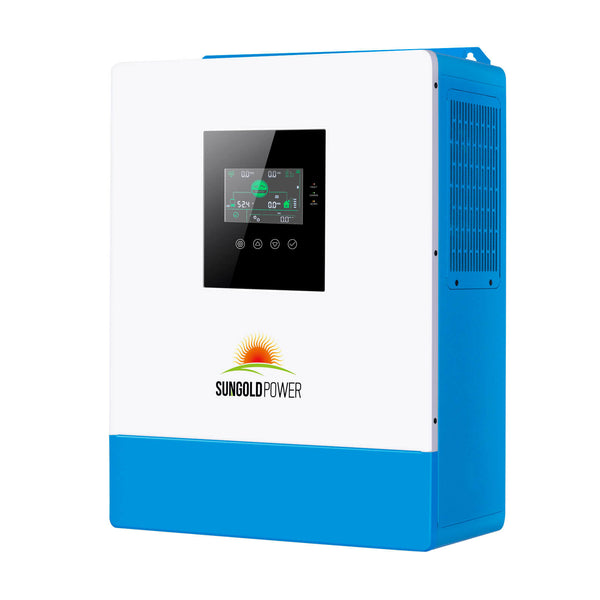
THEN you have to consider your fancy all in one solar charger inverter load manager is ONE piece of equipment. If it fails, no power for you.. for anything. No 120V, no charging of batteries from shore power OR the vehicle alternator OR solar, NO OUTPUT. NO INPUT. Using discreet components means if one thing fails, you can work around it until you get it fixed.
Inverter goes out on a discrete system? You replace the inverter. YOu can still charge the batteries, still use lights and any other native 24V appliances you already have. On an all-in-one system if one part goes down, it ALL goes down. You have no lights because you went through the inverter side for 120V.
Solar charge controller goes down on a discrete system? You can still charge from the alternator or shore power. All-in one system?Again, it all goes down. It's not charging anything. Your truck can't charge it. No charging from shore power unless you have a standalone 48V plug in charger on a long extension cord. But then you can't get any juice out of the batteries anyway because your load management is shut off.
Alternator goes out? Bridge the front/rear batteries and run the truck off the battery bank while solar recharges your battery bank. Can't do that with an all-in-one.
Unifying voltage and using discrete components instead of managing multiple voltages and an 'all-in-one' design builds in redundancy and simplicity.
As far as the water, 24V sureflo diaphragm pump and RO along with UV treatment, 3 stage filtration, and bleach. The filtration process is what consumes the most time, so a slow(er) pump isn't a problem. No point in getting a 20GPM pump only to have an RO/Filtration that are 2-3 GPM.
There's a lot of thought that goes into stuff like this, and if you haven't figured it out yet, I overthink the #(%& out of everything.

Just some food for thought.