• Steel Soldiers now has a few new forums, read more about it at: New Munitions Forums!

  • Microsoft MSN, Live, Hotmail, Outlook email users may not be receiving emails. We are working to resolve this issue. Please add support@steelsoldiers.com to your trusted contacts.

Salvaging Electrical in M1079 Box

AlienFood

New member
28
24
3
Location
Texas
Howdy Ya'll I am stripping out everything in my M1079 Habitat with plans to build a living space with electric and water.

Soon in the future will be a massive 48v battery with a 48v Inverter/solar charger.

As I was rippin screws, I thought...if this wiring is good enough for the Army bumping down the road through FTX's, could i salvage it by keeping it in place and using the generator in <---- as my hook up from my Inverter??

I will be finding ways to rehouse and hide the wire runs on the passenger side to open up my floorplan (conceal under ceiling)
Driver side will be shower/bathroom, kitchen cabinets but having this run would be a convenient way to put in new runs or troubleshoot existing wire.

Would the Generator 110 be a good start to hook right into my own inverter?
Trying to figure out which part of the box is already inverting from the 24v off the battery?
(Edit: found the DC Breaker box in TM, is there no inverting from the 24v? Main 110 comes from Generator only?)
Any downsides to using the wire in-place after?

What have Ya'll done with your box?

Breaker box --->
Electrical Box - Copy.jpg


Generator/Drash hookup --->
Outside Box - Copy.jpg
 
Last edited:

TechnoWeenie

Well-known member
Steel Soldiers Supporter
1,798
1,998
113
Location
Nova Laboratories, WA
.mil used some high quality wire.

The problem, however, is multifold.

1. Wiring is constantly moving - it's a whole different ballgame than a stationary house that doesn't move.
2. You have no clue what modifications were made while or after it was in service.
3. The panel is overkill for just about every system anyone would need, and takes a lot of space.

I would use one in, one out, and ditch the panel. DIN panels are inexpensive and take up a fraction of the space, AND you can run 12V, 24V, 120V, and 240V in the same panel, safely.... with much smaller space used, and still have room for expansion in the future.


You either need a lockout and/or an automatic transfer switch so you don't have shore power coming into your inverter, and vice-versa.

I would also move away from 120V primary, and go with either 24V or 48V primary - reason being is that inverters are not efficient and you lose power going from 24/48 to 120. If an LED bulb is rated for 48V you don't need to do anything else.

Most things can easily be found in 24V versions. But keep in mind that if you go the 120 route you will have a draw any time the inverter is on and in the case of large capacity inverters and low usage, you standby current could be more than the 1 lightbulb you have on.
 
Last edited:

AlienFood

New member
28
24
3
Location
Texas
@TechnoWeenie

1. I will start chopping into the fluorescent light wiring to see if it is braided or solid copper. I know the trending van-life builds say only use braided, but I have yet to hear of an LMTV in the Army catching fire from the van-body electrical wiring (still new here).

2. So far everything is looking pretty clean. But I do know you are right. I will verify each wire before i start pumping juice to my gaming PC and A/C through the wall Lol. Labeling each wire pair would be a great start.

3. Agreed. Panel is way too big, and the Generator 110/220 Inbox sticks out like 6 inches interior since it is recessed from the outside. That would definitely space I could utilize for more of the electrical system. If ounces = pounds then LMTV House inches = feet.


Isn't the inverter supposed to be 2 way? using 120v to charge 48v battery? 48v battery to supply 120AC?
and 120v passthrough for shore power?

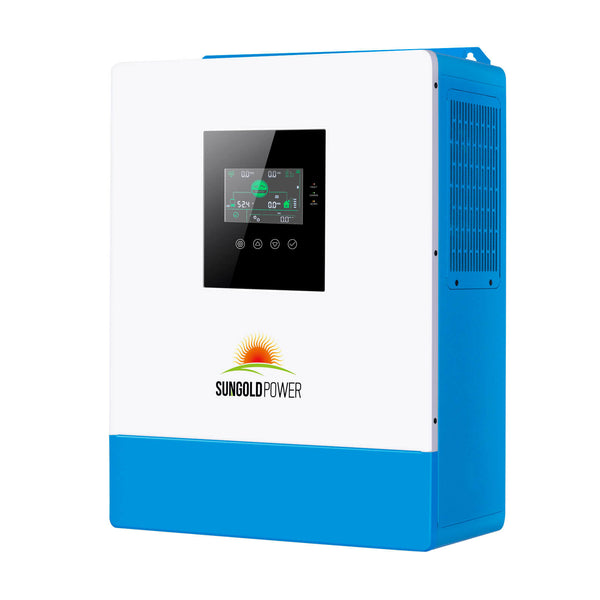
The 120 route is an essential part of the build for me. Understood on the inverter drawing, especially the one I am looking at draws like 25 to 50 watts in idle consumption. Built in UPS instant transfer switch. But if that badboy can start juicing straight into the existing wiring I would be saving good time and money.

Top option so far:
 

TechnoWeenie

Well-known member
Steel Soldiers Supporter
1,798
1,998
113
Location
Nova Laboratories, WA
@TechnoWeenie

1. I will start chopping into the fluorescent light wiring to see if it is braided or solid copper. I know the trending van-life builds say only use braided, but I have yet to hear of an LMTV in the Army catching fire from the van-body electrical wiring (still new here).
Should be tinned copper. Like I said, it's really high quality stuff.

2. So far everything is looking pretty clean. But I do know you are right. I will verify each wire before i start pumping juice to my gaming PC and A/C through the wall Lol. Labeling each wire pair would be a great start.

3. Agreed. Panel is way too big, and the Generator 110/220 Inbox sticks out like 6 inches interior since it is recessed from the outside. That would definitely space I could utilize for more of the electrical system. If ounces = pounds then LMTV House inches = feet.
It's not just the 'unknown' but also the space it takes up. Had to make the same decision with my M934. Freed up a ton of space. Probably could have launched the space shuttle from that panel.

Isn't the inverter supposed to be 2 way? using 120v to charge 48v battery? 48v battery to supply 120AC?
and 120v passthrough for shore power?

The 120 route is an essential part of the build for me. Understood on the inverter drawing, especially the one I am looking at draws like 25 to 50 watts in idle consumption. Built in UPS instant transfer switch. But if that badboy can start juicing straight into the existing wiring I would be saving good time and money.

Top option so far:

I personally prefer a 24V system because you can recharge direct from your vehicle system without a DC->DC charger.

So, you're getting a couple concepts mixed up.

An inverter converts your DC->AC. So whether that's 48VDC->120VAC or 24VDC->240VAC that's the job of an inverter.

A converter is an umbrella term used to indicate a DC->DC or AC->DC conversion. Technically, an inverter is a type of converter but they do different things.

The all-in-one boxes that handle shore power, charging from shore power, charging from solar, converting battery to AC, etc are generally called a 'Bidirectional inverter-charger with integrated solar charge controller' -- At least that's the most technically accurate name. Some Chinese marketing just calls them an 'inverter' but that's not entirely accurate. If you call it a 'solar charger inverter' that would be enough to understand - An 'inverter-charger' would be an inverter that converts VDC to VAC but then also supplies power to the AC circuits when hooked to shore power AND charges the battery, but doesn't have solar inputs.

If you just say 'inverter' that's not the multi-function unit you're thinking of, it's a specific VDC to VAC conversion -and only that conversion.
 

AlienFood

New member
28
24
3
Location
Texas
Should be tinned copper. Like I said, it's really high quality stuff.


It's not just the 'unknown' but also the space it takes up. Had to make the same decision with my M934. Freed up a ton of space. Probably could have launched the space shuttle from that panel.


I personally prefer a 24V system because you can recharge direct from your vehicle system without a DC->DC charger.

So, you're getting a couple concepts mixed up.

An inverter converts your DC->AC. So whether that's 48VDC->120VAC or 24VDC->240VAC that's the job of an inverter.

A converter is an umbrella term used to indicate a DC->DC or AC->DC conversion. Technically, an inverter is a type of converter but they do different things.

The all-in-one boxes that handle shore power, charging from shore power, charging from solar, converting battery to AC, etc are generally called a 'Bidirectional inverter-charger with integrated solar charge controller' -- At least that's the most technically accurate name. Some Chinese marketing just calls them an 'inverter' but that's not entirely accurate. If you call it a 'solar charger inverter' that would be enough to understand - An 'inverter-charger' would be an inverter that converts VDC to VAC but then also supplies power to the AC circuits when hooked to shore power AND charges the battery, but doesn't have solar inputs.

If you just say 'inverter' that's not the multi-function unit you're thinking of, it's a specific VDC to VAC conversion -and only that conversion.
Specific. Completely understand what you mean.

Techno what were your charging capabilities on the M934?
 

TechnoWeenie

Well-known member
Steel Soldiers Supporter
1,798
1,998
113
Location
Nova Laboratories, WA
Specific. Completely understand what you mean.

Techno what were your charging capabilities on the M934?
Just shy of 2KW with factory alternator - 70A @28V
I'm in the process of redoing a box for my M923A2 which has 4x 540W mono solar panels. The panels are pretty close to 4' x 8' so 4 fit almost perfectly on the 16' box.
Planned battery bank will be 30Kwh. So far it's been tested with 2 panels and ~5kwh and has run flawlessly for lights, air fryer, router/internet, etc.
Also planning on 28V diesel gen. Unsure if I'll just use a military one or DIY my own.

The idea is to have basically a month of no sun and no vehicle starting and still have power - with backup options to run the battery bank, and use it as a backup to the starter battery should it go flat.

Camp somewhere for a couple weeks and even if it's winter and heavily overcast, I can either run the truck for a couple hours every couple weeks or run a gen for a couple hours every couple weeks and recharge the batteries.

I planned more of an RV/overlander style build that focused on off-grid sustainability, including water filtration/purification so I can pull water from a lake or stream and have it completely safe to drink within an hour or so - and pushed into a 100 gallon holding tank.
 

87cr250r

Well-known member
1,440
2,252
113
Location
Rodeo, Ca
I work on tugboats and tugboats vibrate violently. Solid wire is frowned upon but we do end up with it on the boats because of off the shelf items like ballasts for fluorescent light fixtures. I don't know of any instances of solid wires breaking. It does add complication when splicing but Wago solves that problem.

SAE has standards for wiring for vehicles, J1127 and J1228. A key characteristic of these standards is flexibility at low temperatures.

MTW wire works great for vehicles but again you have to pay attention to on the strand counts for the right amount of flexibility. Some MTW wire is stiff like THHN you buy at Home Depot while others are flexible like welding leads.
 

AlienFood

New member
28
24
3
Location
Texas
Just shy of 2KW with factory alternator - 70A @28V
I'm in the process of redoing a box for my M923A2 which has 4x 540W mono solar panels. The panels are pretty close to 4' x 8' so 4 fit almost perfectly on the 16' box.
Planned battery bank will be 30Kwh. So far it's been tested with 2 panels and ~5kwh and has run flawlessly for lights, air fryer, router/internet, etc.
Also planning on 28V diesel gen. Unsure if I'll just use a military one or DIY my own.

The idea is to have basically a month of no sun and no vehicle starting and still have power - with backup options to run the battery bank, and use it as a backup to the starter battery should it go flat.

Camp somewhere for a couple weeks and even if it's winter and heavily overcast, I can either run the truck for a couple hours every couple weeks or run a gen for a couple hours every couple weeks and recharge the batteries.

I planned more of an RV/overlander style build that focused on off-grid sustainability, including water filtration/purification so I can pull water from a lake or stream and have it completely safe to drink within an hour or so - and pushed into a 100 gallon holding tank.
Because of you, I will look at my 24v options. Would 48v have any advantages on efficiency and making 30Kwh last longer?

One I can think of is the new large 48v, 16Kwh batteries are just a sweet deal. Add in a 24v to 48v Converter between the vehicle and the DC --> DC charger.

Same Kwh target here...shooting for 2 x 16Kwh batteries in parallel. And same water capacity target at 100 Gallons. Would you run a water pump off the 30Kwh to pull in water from lake/stream?
 

TechnoWeenie

Well-known member
Steel Soldiers Supporter
1,798
1,998
113
Location
Nova Laboratories, WA
Because of you, I will look at my 24v options. Would 48v have any advantages on efficiency and making 30Kwh last longer?

One I can think of is the new large 48v, 16Kwh batteries are just a sweet deal. Add in a 24v to 48v Converter between the vehicle and the DC --> DC charger.

Same Kwh target here...shooting for 2 x 16Kwh batteries in parallel. And same water capacity target at 100 Gallons. Would you run a water pump off the 30Kwh to pull in water from lake/stream?
48V comes in handy with large loads - higher voltage = lower amperage. Watts are watts. 48V @ 100A is the same as 12V @ 400A. The batteries remain the same, they're just in a different configuration. Pricing should be roughly the same.

The thing is, when it comes to mobile, there aren't really the needs for high current devices like dryers, or ovens. Most mini splits you find will be maybe 1500W and even at 12V can be managed with 1/0 or 2/0.

The other thing people do is they think from a 120V side - They're told 48V inverters are more efficient, and they are, but they're not asking the right question, which is 'Do I need 120V? If so, for what?' - Instead you ignore that question altogether and have already assumed 120V operation and are asking 'where am I going to put the outlets?' , 'What can I plug in?'. When the first question should have been answered first - 'Do you really want to rely on 120V?' -- Then you realize that inverters have a cost to them. They're not 100% efficient and even with ZERO power draw on the 120VAC side the inverter is still drawing power in a standby mode. So, what happens when you only need 1 light, but you have a 5KW inverter that pulls 50W just to be on, and it's powering a 9W bulb? You're using nearly 60W for a 9 watt bulb. That's insanely inefficient. The solution? Run everything off native DC voltage. That's much easier to do with 24V. So, ask yourself what you 'need' that runs on 120V or 240V that can't be run on 24V or 12V?

24V LED lighting, 24V fans, TVs, laptops, phone chargers,etc. that you'd normally think of as AC things are really DC things... and even IF you need to drop something down from 24V to 12V it's a LOT more efficient to use DC->DC conversion than DC -> AC.

I'm gonna mess you up even more, because things we commonly use like phone charges that plug into the wall are actually AC->DC adapters in of themselves. Each conversion from DC to AC or AC to DC is gonna lose you about 20-30%...So, you'd be taking your 48VDC to 110VAC, then that 110VAC would be converted BACK to 5V DC (in case of your phone charger), and you've now nearly doubled your power usage.... OR, you could get a 24 VDC to 5DC charger and only take a 5% efficiency hit, instead of a 75-90% hit.

Each item adds up. Every light. Every charger. Every TV or appliance. It all adds up.

The TV I have is designed to run off 12V, so does my computer, its monitors, the router, etc. Just about every small electronic device runs on DC, and every one of them come with an AC -> DC adaptor. The trick is to find out what voltage it needs, which these days is usually 5V, 12V or 19V, and get an adapter to convert your 24V to that 5, 12, or 19, and run the device directly. It's a TON more efficient.

Oh, and since USB-C PD (power delivery) protocol exists, they make USB-PD adapters, so my 12V computer is actually charged with a USB-C PD cable.. It has a chip inside that says 'SEND ME 12V!' and the USB-C adapter is now 12V instead of 5V. So that means instead of running 120VAC cabling everywhere, I can run USB-C ports everywhere instead, using much smaller, easier to hide wires, and still power the devices I need on a daily basis.

Once you start realizing ALL the stuff you need can be had in 24V or easily converted to work on 24V via an extremely efficient adapter, you find you don't really need an inverter, except for maybe AC, and the occasional kitchen appliance like a microwave or air fryer. You only turn the inverter on when you're using those appliances so there's no standby draw. Wanna run a welder? Get a 240V inverter. Only turn it on when you want to use your welder. Most foreign made stuff is designed to run on 230V, and because most of the world other than us runs on 230V you can get 230V inverters much cheaper than 240V. Just gotta worry about the single vs 3 phase stuff...

Then you realize that keeping everything a common voltage is HUGE. It means you only need to run one version of something. You don't need to mix voltages, or have one thing adapt to another thing which can only be used on this one thing but not if the other thing isn't working.

By standardizing on 24V, I only need to worry about 24V. The truck itself outputs 24V so it can top off my house batteries any time I'm driving. If for whatever reason my starting batteries die I can jump them to the ilfepo4 bank. Ditto with solar - I can bridge the solar to charge the truck batteries if needed instead of the house batteries (battery bank). It just simplifies a LOT of stuff. If I want to make anything portable, like light stands, or battery chargers, I use Anderson connectors which are common in 50A, 175A and even 350A flavors, and are designed to be used in wet locations. If you can think of it, odds are there's a 24V version of it, or you can make it 24V for very little money/work.


THEN you have to consider your fancy all in one solar charger inverter load manager is ONE piece of equipment. If it fails, no power for you.. for anything. No 120V, no charging of batteries from shore power OR the vehicle alternator OR solar, NO OUTPUT. NO INPUT. Using discreet components means if one thing fails, you can work around it until you get it fixed.

Inverter goes out on a discrete system? You replace the inverter. YOu can still charge the batteries, still use lights and any other native 24V appliances you already have. On an all-in-one system if one part goes down, it ALL goes down. You have no lights because you went through the inverter side for 120V.

Solar charge controller goes down on a discrete system? You can still charge from the alternator or shore power. All-in one system?Again, it all goes down. It's not charging anything. Your truck can't charge it. No charging from shore power unless you have a standalone 48V plug in charger on a long extension cord. But then you can't get any juice out of the batteries anyway because your load management is shut off.

Alternator goes out? Bridge the front/rear batteries and run the truck off the battery bank while solar recharges your battery bank. Can't do that with an all-in-one.

Unifying voltage and using discrete components instead of managing multiple voltages and an 'all-in-one' design builds in redundancy and simplicity.

As far as the water, 24V sureflo diaphragm pump and RO along with UV treatment, 3 stage filtration, and bleach. The filtration process is what consumes the most time, so a slow(er) pump isn't a problem. No point in getting a 20GPM pump only to have an RO/Filtration that are 2-3 GPM.

There's a lot of thought that goes into stuff like this, and if you haven't figured it out yet, I overthink the #(%& out of everything. :geek:

Just some food for thought.
 
Last edited:

AlienFood

New member
28
24
3
Location
Texas
Techno I will be studying this chapter you gave us while I am working this week. I have never heard anyone break through the electrical problem with that much genius. Thank you from me, and should be thank you from all of us.
 

TechnoWeenie

Well-known member
Steel Soldiers Supporter
1,798
1,998
113
Location
Nova Laboratories, WA
Techno I will be studying this chapter you gave us while I am working this week. I have never heard anyone break through the electrical problem with that much genius. Thank you from me, and should be thank you from all of us.
As 'complicated' as it all sounds, it's actually a pretty good example of KISS.

Truck = 24V
Alternator = 24V
Battery = 24V
Charge Controller = 24V
Fridge = 24V
Lighting = 24V
Phone charger, internet, laptops, etc = 24V (some through a USB C adapter)

Vs.

Truck = 24V
Alternator = 24V
Battery = 48V
Charge controller = 48V
Fridge=120V (through inefficient inverter)
Lighting=120V (through inefficient inverter)
Phone charger, internet, laptops, etc =120V (through inefficient inverter)

Where's the redundancy?

How do you have lights or basic needs met if your inverter fails? How do you charge the battery or get anything out of it if the charger fails? There's a single point of failure in each stream that puts you dead in the water. How do you jump your 24V truck batteries if they go dead? Gonna get a fancy 48V -> 24V charger and wait 8 hours for it to recharge the front? What if there's a catastrophic battery failure and you can't recharge them? How's your 10A 48V->24V charger gonna start a truck that needs 300A to crank over?

With the 24V system the house battery system could completely fail and I could bridge it to the alternator/front batteries and/or run a small gen and still have complete system running. Any component fails and it is easily bypassed and doesn't impact operations. I have 3 ways of charging the battery bank, 3 ways of getting power 'out'...without complex conversions between them - literally a switch. Redundancy is built in.

Keeping everything 24V = multiple sources for power, multiple means of output if one method fails. It's all interchangeable so you can mix/match inputs/outputs with no issues.
 

AlienFood

New member
28
24
3
Location
Texas
Are you still keeping an inverter for shore power just in case you have the opportunity to use it?

When one source fails, and you bridge, does that involve reconnecting wires or do you have a switch schematic in place?

Like if truck battery dies, and you want to use house battery or solar to recharge/or start truck.

Or if you plugged into 30Amp shore for the weekend, can you still simultaneously draw power with your laptop and A/C while charging batteries
 

TechnoWeenie

Well-known member
Steel Soldiers Supporter
1,798
1,998
113
Location
Nova Laboratories, WA
Are you still keeping an inverter for shore power just in case you have the opportunity to use it?

When one source fails, and you bridge, does that involve reconnecting wires or do you have a switch schematic in place?

Like if truck battery dies, and you want to use house battery or solar to recharge/or start truck.

Or if you plugged into 30Amp shore for the weekend, can you still simultaneously draw power with your laptop and A/C while charging batteries
Yep. Plug in on the side of the truck charges battery bank, front and rear. Yes, input and output are same voltage and exist simultaneously so the 120/240 coming in will power the charger, which will power any existing 24V loads then the remainder is put in the house battery bank. Ditto goes with anything charging on the slave port - You can plug in another truck or a charger and depending on the position of the battery switch depends on if you're charging to/drawing from the front truck battery, or the rear house bank.

Battery switch isolates front starting battery and rear battery bank under normal conditions. BATT 1, BATT 2, BOTH, OFF are its settings.
500A solenoid switches on when truck is running to bridge the truck/alternator and house battery bank.

No wires need to be moved or reconnected. Just use the battery switch/combiner. Everything else is automatic.

Here's a cliff notes version. For brevity I didn't include the wiring panel, switches for lights, fuses, slave port, etc. Default is BATT 1 on the switch because solenoid joins BATT 1 and BATT 2 when truck is running. When truck isn't running I can manually join batt 1 and batt 2, or BATT 2 only if I need to jump the truck from the house bank. The solenoid runs through a switch so I can disable the solenoid if need be - meaning I can completely isolate the truck battery from the truck while alternator is running to put maximum juice to the house batts - if needed.


2 things to note - Lifepo4 are higher voltage than SLA - so the alternator will really only charge the house battery to ~90% UNLESS you bump the voltage up. Second, you cannot use a voltage based transfer switch because lifepo4 are higher voltage and the device will see the higher voltage as 'the truck is running' and always join the batteries together, so an ignition switched source is going to be the way to go.


5d0c5008-46b5-4cbc-8a16-f9533460a75a.jpg
 
Last edited:

chucky

Well-known member
6,788
19,364
113
Location
TN .
Yep. Plug in on the side of the truck charges battery bank, front and rear. Yes, input and output are same voltage and exist simultaneously so the 120/240 coming in will power the charger, which will power any existing 24V loads then the remainder is put in the house battery bank. Ditto goes with anything charging on the slave port - You can plug in another truck or a charger and depending on the position of the battery switch depends on if you're charging to/drawing from the front truck battery, or the rear house bank.

Battery switch isolates front starting battery and rear battery bank under normal conditions. BATT 1, BATT 2, BOTH, OFF are its settings.
500A solenoid switches on when truck is running to bridge the truck/alternator and house battery bank.

No wires need to be moved or reconnected. Just use the battery switch/combiner. Everything else is automatic.

Here's a cliff notes version. For brevity I didn't include the wiring panel, switches for lights, fuses, slave port, etc. Default is BATT 1 on the switch because solenoid joins BATT 1 and BATT 2 when truck is running. When truck isn't running I can manually join batt 1 and batt 2, or BATT 2 only if I need to jump the truck from the house bank. The solenoid runs through a switch so I can disable the solenoid if need be - meaning I can completely isolate the truck battery from the truck while alternator is running to put maximum juice to the house batts - if needed.


2 things to note - Lifepo4 are higher voltage than SLA - so the alternator will really only charge the house battery to ~90% UNLESS you bump the voltage up. Second, you cannot use a voltage based transfer switch because lifepo4 are higher voltage and the device will see the higher voltage as 'the truck is running' and always join the batteries together, so an ignition switched source is going to be the way to go.


View attachment 962245
How will you seperate whats going to feed the main electrical panel between generator shore power inverter ? This diag, looks like it will seperate the two battery sources well enough it just seems to put all your eggs in one basket if the inverter goes down your S.O.L.
 

TechnoWeenie

Well-known member
Steel Soldiers Supporter
1,798
1,998
113
Location
Nova Laboratories, WA
How will you seperate whats going to feed the main electrical panel between generator shore power inverter ? This diag, looks like it will seperate the two battery sources well enough it just seems to put all your eggs in one basket if the inverter goes down your S.O.L.
How do you see the inverter powering things? It doesn't power much at all.

That's the whole point.

You ditch the 120V panel. You're not running 120VAC through the system. You're running 24V. You can charge either 24V system with any (or all) points of charge. You can have a solar panel charging while also charging from shore power AND charging from alternator - simultaneously. Each separate charging system is designed for that, with solar and shore power charging being 'smart' and measuring resistance and yadda yadda and the alternator being 'dumb' and mostly operating on constant current/voltage.

Inverter ONLY powers rarely used items that need 120VAC - Air fryer/instant pot, microwave, and AC. When not in use it has a shutoff switch so zero power is drawn on standby.

All the chargers, TV lighting and everything for daily use is direct 24V to the battery bank or through a DC->DC adapter for each device which is very efficient. Computer, Monitor, phones, etc all get power via USB-C, small fans get powered by USB.

...as for the 24V panel?

DIN rail!

You could turn that 120V box into a DIN rail box but it takes up a TON of real estate for no reason.

A 12 slot box (12 circuit) runs like $15 (plus whatever accessories/fuses/breakers/displays/relays/etc you want to use. The nifty thing is DIN RAIL is a standard, and just about any device you can think of they make in DIN rail mount. Power supplies, voltmeters, breakers, switches, relays, indicator lights, etc. It's near infinitely customizable.


Some examples (not mine). For size context, A very generous 18 circuit box is ~14.5" x 8" x 4.25"

One could get a 24 gang box and run your solar input, 24V distribution, 24V breakers, and 120V distribution in the same box - theoretically.


71+hhl1SFBL.jpg

716xCCl53YL.jpg


Last edited:

chucky

Well-known member
6,788
19,364
113
Location
TN .
If you want to spend boat loads of money on switching systems that WILL at some point start welding they're selves together at the contact points in automatic switching gear ( at least my dealings with them )

I think you will be miles ahead to not use anything that you cant get at lowes/home depot when something does come apart so you can fix even out in the boondocks .

I just made my 110/220/ electrical panel have a tail coming out of it that has to be hand plugged into A. shore power plug B. generator plug C. inverter plug so you can never get it jacked up and nothing ever get tied together all in 50 amp female plug recepticals and the main panel on a male 50 amp tail to plug into what ever source you need and you wont have 100 bucks in the whole deal and every hardware store will have what you need to repair .

On the house vs. truck batteries i just used the old push in and turn bull dozier ignition switches to isolate what is feedin to what so if i want solar to charge all batts. or just house batts. or if i want the truck to charge any or all batts or start my generator with its own battery and charge any combo of the batts.

Plan on any or all thing in your truck to fail at any given moment and what is your back up plan A then B then C SOLAR/SHORE/GENERATOR/TRUCK/INVERTER/ and how fast can you find/replace the problem in Nowhere USA .
 

TechnoWeenie

Well-known member
Steel Soldiers Supporter
1,798
1,998
113
Location
Nova Laboratories, WA
If you want to spend boat loads of money on switching systems that WILL at some point start welding they're selves together at the contact points in automatic switching gear ( at least my dealings with them )

I think you will be miles ahead to not use anything that you cant get at lowes/home depot when something does come apart so you can fix even out in the boondocks .

I just made my 110/220/ electrical panel have a tail coming out of it that has to be hand plugged into A. shore power plug B. generator plug C. inverter plug so you can never get it jacked up and nothing ever get tied together all in 50 amp female plug recepticals and the main panel on a male 50 amp tail to plug into what ever source you need and you wont have 100 bucks in the whole deal and every hardware store will have what you need to repair .

On the house vs. truck batteries i just used the old push in and turn bull dozier ignition switches to isolate what is feedin to what so if i want solar to charge all batts. or just house batts. or if i want the truck to charge any or all batts or start my generator with its own battery and charge any combo of the batts.

Plan on any or all thing in your truck to fail at any given moment and what is your back up plan A then B then C SOLAR/SHORE/GENERATOR/TRUCK/INVERTER/ and how fast can you find/replace the problem in Nowhere USA .
I think you're missing the point. You don't want to rely on 120VAC in a mobile rig if you don't have to. Everything should be the voltage of the battery bank, unless not avoidable.

That's why I suggested and planned out a discrete system that doesn't rely on a 120VAC inverter, and have separate discrete components for each point so should one fail there are alternatives until it can be fixed.

Multiple ways to charge, multiple paths for electricity to take, very simple operation parameters that reduces the necessity of add'l equipment and is not only more reliable but more efficient in terms of less power draw.

This stuff isn't that expensive if you plan it right - there's a price/performance line you need to be on the correct side of. Victron is pretty much the gold standard but also costs 4-5x more. When you can buy 3 or 4 units for the cost of a victron it makes more sense to go with a different high quality brand and just buy 2...or 3... And still save a ton.

My experience as an emergency vehicle upfitter showed me decades of planning ahead for failures, so everything is designed to be modular and more important serviceable.
 

TechnoWeenie

Well-known member
Steel Soldiers Supporter
1,798
1,998
113
Location
Nova Laboratories, WA
Do you know any options for 24 volt stand up style refrigerators even rather small ones that aren't ridiculously expensive?
I don't want to get too far into the weeds and hijack the OPs post about his panel, but I'll try to give some general info....

The answer is....Yes .... But realistically, no.

First is, most RV fridges are gonna be 12VDC/110VAC. 24V or 48V fridges are niche products, and you're gonna pay for that.

This is where getting a smaller 'home' fridge is gonna keep costs down, albeit at the expense of efficiency and complexity. A basic 18cu ft fridge/freezer with no frills is like $250... You'd need to run an inverter 24-7 and that defeats the purpose of trying to find a native 24v fridge. BUT... $300 vs $1800 means you can spend that $1500 on more batteries and solar, which offset the inefficiency. So you're still paying for it one way or another, just moving where the money is going.

You will expect to pay $1500-$2K for a 6-10cf 24V fridge/freezer. The average home size fridge is 18-30cf...so, you're absolutely paying a massive premium for a much smaller space.

Even ignoring the cost issue, in a mobile application stand up fridges aren't that practical if you're doing anything but staying on paved roads and even then, there's problems.

You're going to pay a premium for a standup fridge and you have to worry about locking the door and making sure things inside the fridge are put in there in a way that they're not sliding all over the place.

Chest fridges/freezers make a lot more sense. Not only are things more secure, but they're also more efficient as the cold doesn't escape every time you open the fridge.

I've been off grid for about 2 yrs now and started with a standard standup fridge that drew wayyyy too much power. I transitioned to a small 1cu ft chest fridge (32qt for cooler size comparison) for testing. I kept it set at 34* and it drew an average of 6 watts. I was frustrated by the lack of frozen storage after about a year and felt the need to upgrade. My current setup is a dual zone fridge/freezer that's split roughly 1.5cu ft and 1/2 cu ft in a chest configuration that is more than ample for a couple weeks of frozen and refrigerated foods. I reduce the need for refrigerated items by using powder substitutes when available - powder, butter, mustard, eggs, etc all have some pretty decent tasting freeze dried/dehydrated alternatives that are relatively inexpensive.

I was originally concerned about the whole 'move one thing to get another thing below it' but it really hasn't been an issue as you start to learn to organize vertically. Eg things like yogurt or cottage cheese in a normal fridge you'd put them in a row, whereas in a chest freezer you stack them. So you just grab the top of the stack.

The fun part is not only in efficiency but also cost. You can pick up reliable 64qt (2cu ft) dual zone units like mine for less than $300. If you want premium features like a danfoss compressor (More efficient, more reliable) and things like stainless exterior, waterproof,etc the costs go up from there, pretty quickly.

There's also the option of an 'Aussie fridge'.... A 120V chest freezer that has internal thermostat bypassed and controlled by a separate mechanical thermostat that can be set for above freezing.,. They're insanely efficient and you're only limited to the frustration level of having to dig down to get stuff, but being that you can pick up a 6cu ft chest freezer for $200 vs $300 for 2cu ft, it's an option. The downside is you're still having to run an inverter as when you start looking at 24v chest fridges of that size you're back into $$$ territory.

You will either have to modify a stand up fridge designed for off-grid to make it mobile friendly, or spend an arm and a leg for an RV/over landing designed fridge. Between higher efficiency and lower cost, those 2 things were the primary reasons I went with a chest/cooler style.

But, it's just me. If you have 3 kids a wife you're trying to take camping for 2 weeks that's an entirely different ballgame and your needs will dictate the equipment.

You really need to rethink things for mobile applications. The whole 'how do I get 120VAC' thing is a perfect example. People get focused on existing things not realizing that the question shouldn't be 'how do I?' it's 'Why would you?'. So, in that vein, going with a standup fridge is going to be less efficient and cost more, but you get more size, more accessibility, and comfort of familiarity. You learn very quickly what 'necessities' are, and space management is important in a smaller environment. This, again, is an excellent skill to have. Being able to think about alternatives and start at the beginning of the problem instead of the middle. Eg 'how do I keep my milk cold?'. Don't ask how. Ask IF you need to keep it cold, and the answer is no. You have milk powder, shelf stable milk, almond milk, oat milk, etc all that you can find that don't require refrigeration. I also listed mustard as another thing. I have basically a lifetime of mustard powder in different varieties (normal, dijon, Chinese hot) that are 1:1 ratio powder to water. I need a tbsp for a sammich? Tbsp of water and tbsp of mustard powder in a tiny sauce cup I have and 2 seconds of stirring and there ya go. I'm not wasting precious fridge space with a 12oz bottle of mustard I might use once a week. So, a lot of is just rethinking how you do things instead of asking how you keep doing the things you've been doing.

Here's just an example of what you're looking at for fridge and freezer - chest style - that's lower cost.


Screenshot_20260213-025037.png
 
Last edited:
Top